LifeScan OneTouch Carry Case
Client snapshot
LifeScan, maker of the OneTouch blood glucose monitoring systems, is one of the leading brands in diabetes care. Its meters are used several times a day by people managing diabetes, at home, at work and on the move. Each meter ships with a carry case, which makes the case part of the daily routine of millions of users.
The challenge
At the time, LifeScan had five meters on the market, each with its own dedicated carry case and its own set of components. Every case was a separate SKU to source, store, pack and ship. The result was higher costs, more complex logistics and extra pressure on a limited internal workforce.
LifeScan asked Forward AP to rethink the carry case from the ground up. The goal was to reduce SKUs drastically while improving the experience for the user. The new case had to allow testing without taking the devices out, and keep the meter, lancing device and supplies together in the most efficient way to prick and test.
Usability was not optional. Many people living with diabetes have reduced dexterity, so every interaction, from opening the case to removing the lancing device, had to be easy for all users to manage.
The case also had to reflect the value of the device it carried. LifeScan wanted a product that looked sleek, technical and premium, not a generic pouch.
The solution
The Forward AP design team started with an analysis of all five meters, looking for the smallest common form factor that could serve the whole range. In parallel, user studies were run together with LifeScan to understand how people actually test, and which arrangement of devices made the process feel most natural and effortless.
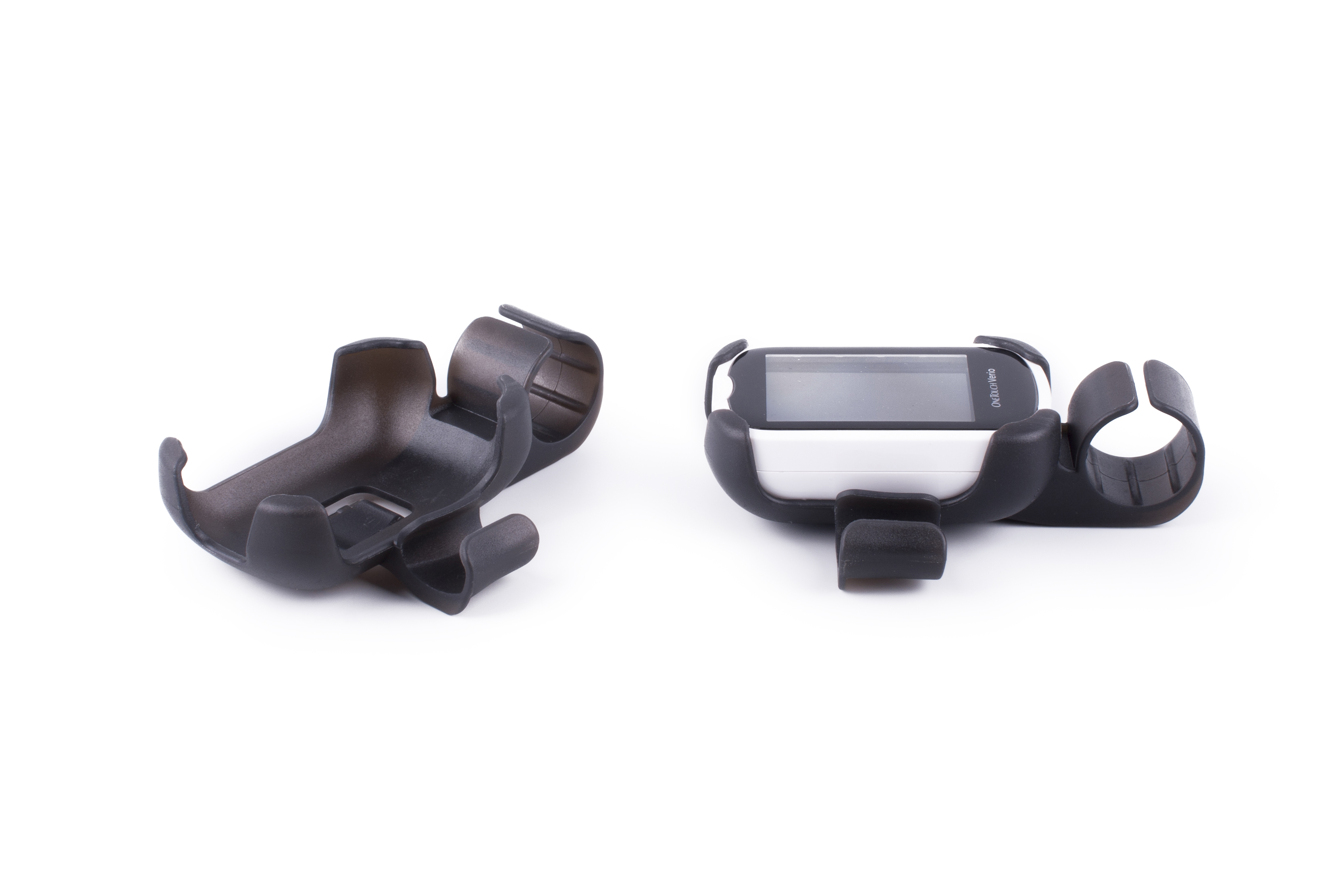
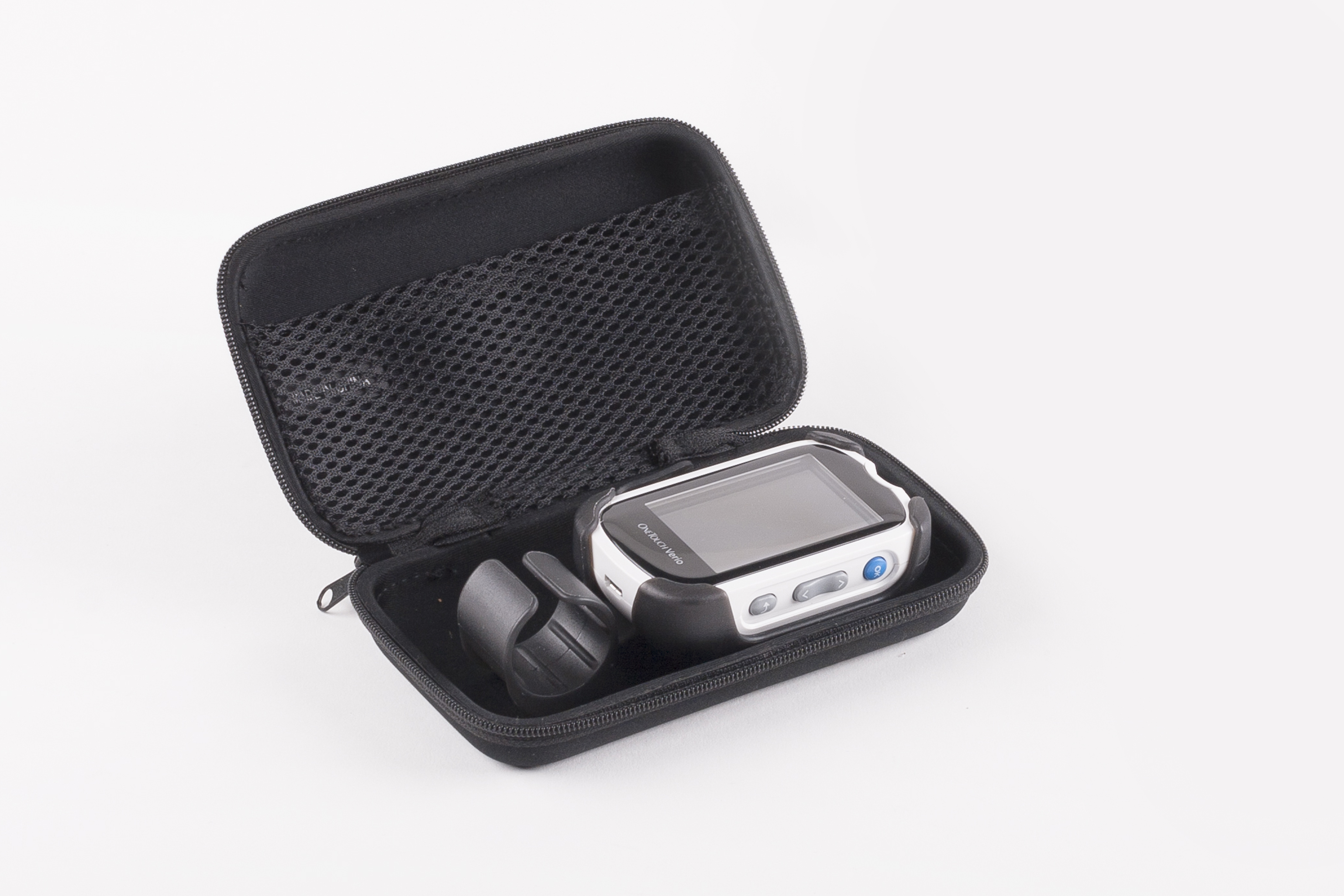
These insights led to an injection-moulded cradle, an approach no other company was using at the time. The cradle holds the meter and lancing device in a fixed, logical position, so the user can open the case and test directly inside it. Nothing needs to be unpacked, rearranged or put back in a specific way.
Material choice was key. The cradle is made from a TPR and POE blend that balances strength with shape memory. It grips the devices firmly yet releases them easily, even for users with limited hand strength. In drop tests from 1.4 m, the devices stayed protected and together inside the case.
The cradle also replaced the stitched elastic loops commonly used to hold devices in place. Elastics are labour-intensive, vary from piece to piece and lose tension over time. The moulded cradle is consistent, durable and cheaper to produce, and its manufacturing can be fully automated.
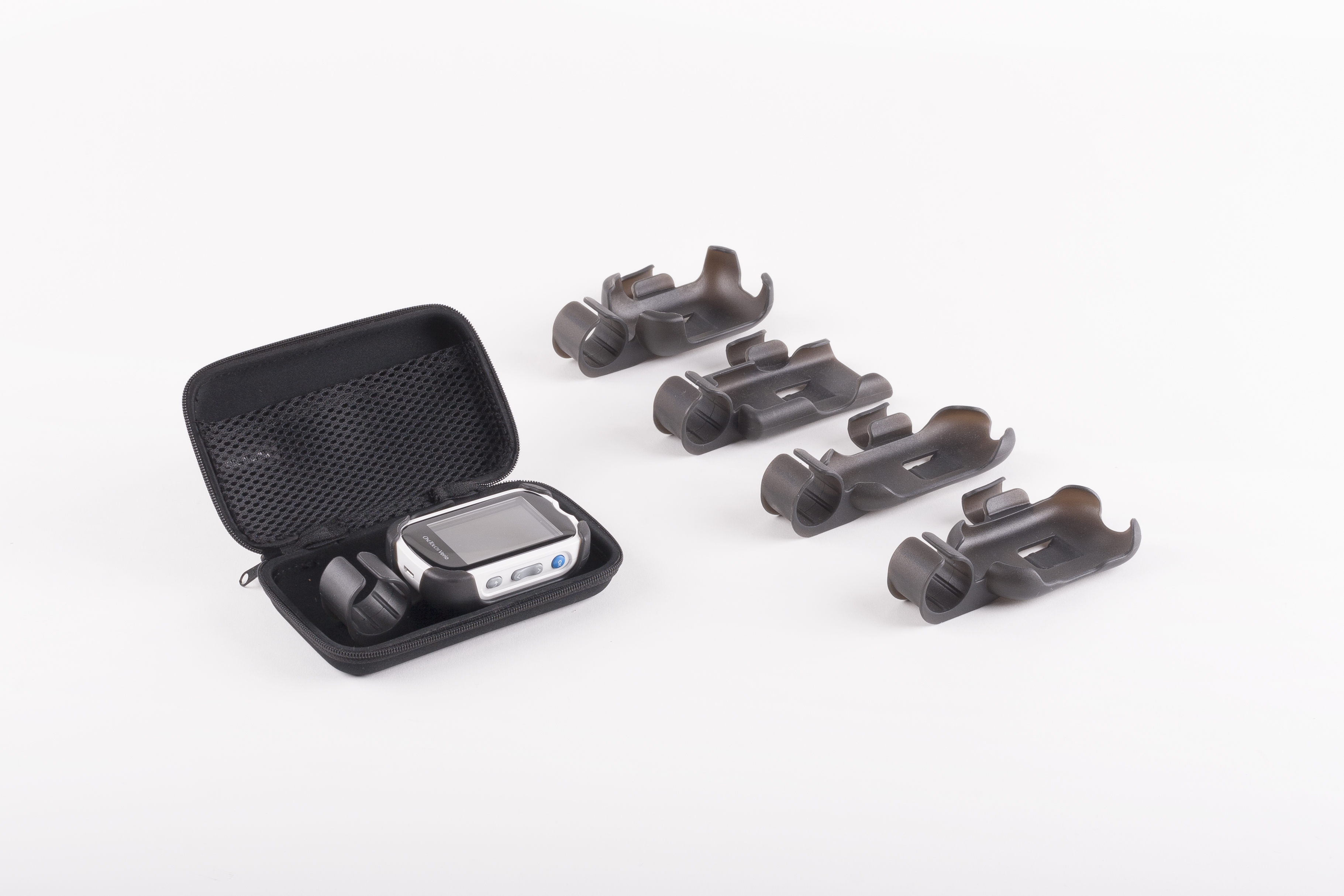
This created the modular system at the heart of the project. Each meter has its own cradle, and every cradle fits into the same outer case. One outer SKU now covers the entire range.
For the outer case, the team chose a thermoformed construction. It combines cost efficiency with a rigid structure that protects the contents, and a clean, elegant finish that feels valuable in the hand. A mesh pocket in the lid keeps extras organised and within reach.
Outcome
The project transformed LifeScan's carry case operation. With a single outer case SKU and fully automated cradles, the company drastically simplified sourcing, storage and shipping. Much of the operational legwork moved from LifeScan's own teams to Forward AP's manufacturing and logistics network, while automation and volume brought the unit cost down.
The case has been produced in the millions since its launch and holds Forward AP's lowest return rate on record, with very few incidents reported over the years. For users, it means a simpler, more reliable testing routine. For LifeScan, it proved that reducing complexity and improving the product can go hand in hand.