Introduction
Medical technology is moving fast. This month, Medtronic's Hugo robotic-assisted surgery system was reported by The Robot Report to be on track to pass 50,000 cumulative procedures. Surgical robots sit in operating rooms, but the same wave of innovation is putting smarter, smaller devices in patients' pockets and clinicians' bags: insulin pumps, continuous glucose monitors, coagulation meters, portable diagnostics.
Every one of those portable devices travels with something: a case, a pouch, a belt or a holster. For medical device companies, that accessory is easy to treat as a last-minute purchase. It should not be. When a case is supplied with a medical device, it becomes part of the product the patient or clinician experiences, and part of what the device maker is responsible for.
Why the case is part of the device experience
A patient using a glucose meter may open its case several times a day for years. A home-care nurse carries a diagnostic kit from house to house. If the case is hard to open, does not hold the strips and lancets in order, or cannot be cleaned, the user blames the device and the brand on it.
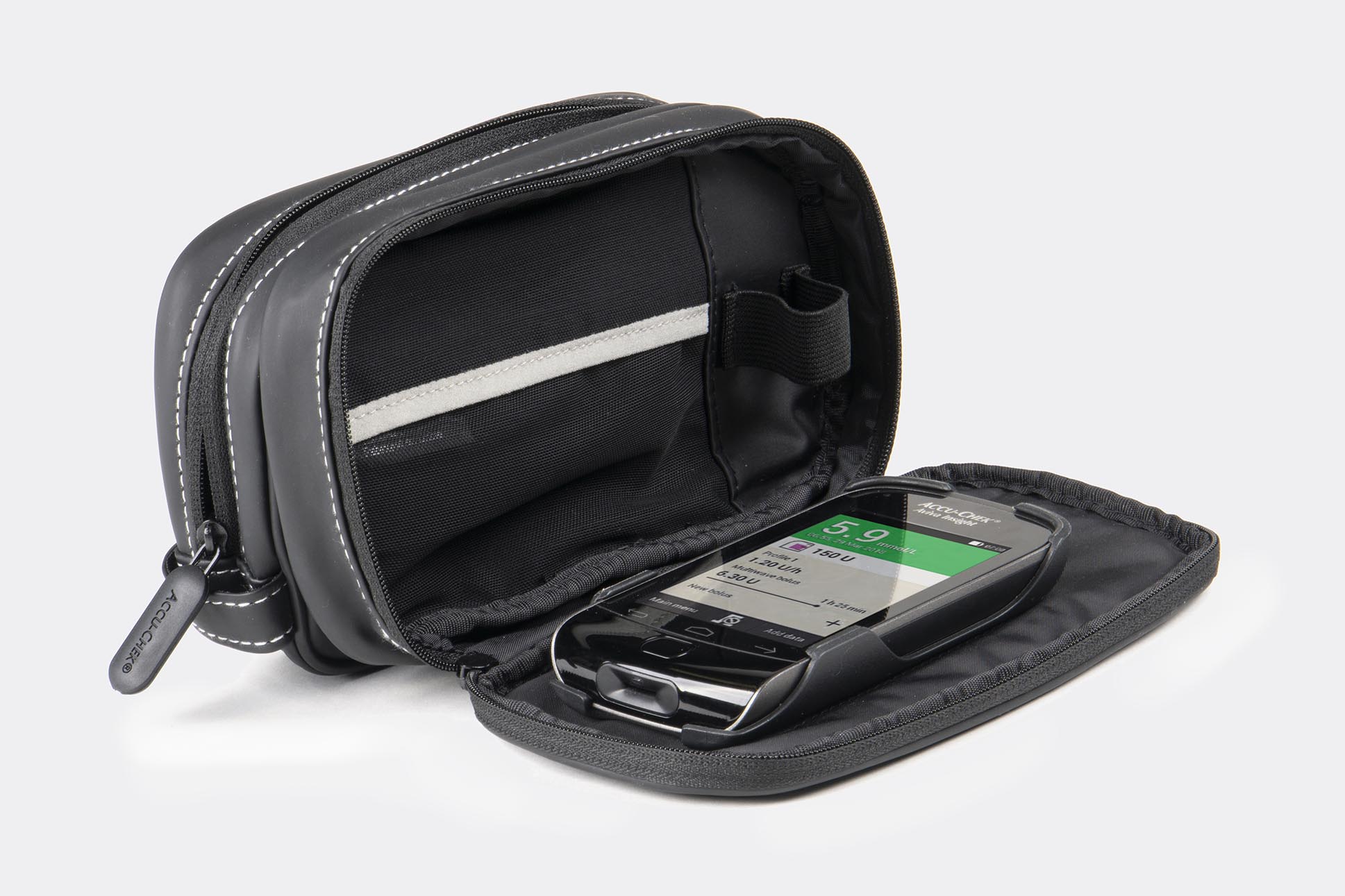
Good medical cases are designed around the use: one-handed opening, clear places for each component, a secure hold on the device, discreet looks for daily wear and robust materials for clinical routines.
What ISO 13485 means for a carry case
ISO 13485 is the quality management standard for medical devices. It covers how a company controls design, purchasing, production, traceability and corrective actions.
A carry case is often not a medical device in itself, but when it is supplied with one, the device maker's quality system has to cover it as a purchased component. That is why medical customers often prefer case suppliers and factories that work within an ISO 13485 framework, or at least ISO 9001 with medical-grade controls. In practice it means:
- Documented design inputs and approvals for each case.
- Controlled materials, with no silent substitutions.
- Defined inspection criteria and records per lot.
- A clear process for deviations, changes and complaints.
Materials: REACH, RoHS and skin contact
Medical cases sit next to electronics and are handled every day, sometimes worn against the body. Material compliance is therefore a basic requirement:
- REACH compliance for fabrics, foams, coatings and plastics sold in Europe, with no substances of very high concern above legal limits.
- RoHS for any component that touches or forms part of electronics, such as conductive parts or integrated lights.
- Skin-contact suitability for belts, straps and pouches worn on the body, often supported by biocompatibility testing of the materials.
- Latex-free and allergen-aware choices where patients may be sensitive.
Each of these needs supplier declarations and, where required, test reports that the device maker can file.
Designing for cleaning and disinfection
In clinical settings, cases are wiped down with alcohol, chlorine or quaternary ammonium products. Not every fabric or print survives that. Practical design choices include:
- Coated or laminated fabrics with closed surfaces instead of open weaves.
- Fewer seams and pockets where dirt can collect.
- Thermoformed or silicone parts that wipe clean.
- Prints and logos tested against the customer's cleaning agents.
The right answer depends on where the device is used: a patient's home, a hospital ward or an ambulance.
Fit, protection and the device's own tests
A medical device has usually passed drop, vibration and environmental tests. The case should support those results, not undermine them. Thermoformed EVA cases and injection-moulded cradles hold a device precisely, while foam and fabric absorb shocks.
We recommend testing the case with the real device, not only a dummy, and including the case in the customer's own transport and drop tests where possible.
Documentation and traceability
For medical customers, what ships with the case matters as much as the case. Expect a supplier to provide material declarations, inspection reports, lot numbers linked to material batches and a change-notification process. If a zipper supplier changes a component, the device maker should hear about it before it reaches production, not after.
Questions to ask a carry case supplier
- Do you work with factories certified to ISO 13485 or ISO 9001, and can we audit them?
- How do you control and document material changes?
- Can you provide REACH and RoHS declarations for every material?
- Which cleaning agents have your materials and prints been tested against?
- How do you link each production lot to its material batches and inspection records?
- Who in your team owns the design, from the first sketch to the approved golden sample?
Conclusion
As medical technology advances, from surgical robots to wearable monitors, the products around the device need the same care. A carry case for a portable medical device is a small part with a big influence on daily use, compliance and brand perception. Treating it as part of the device, with the right quality system, materials and documentation, protects patients, clinicians and the manufacturer.
Forward AP has designed and produced cases, belts and pouches for diabetes care, diagnostics and other medical devices for many years. Discover our OEM carry case development.